Technology news continues shaping markets, products, and everyday digital life at a rapid pace. Chip innovation, startup capital, artificial intelligence, and platform shifts drive conversations across global tech ecosystems.
Today’s top stories highlight how hardware evolution meets venture funding momentum, while several parallel developments signal where the focus of innovation continues to move.
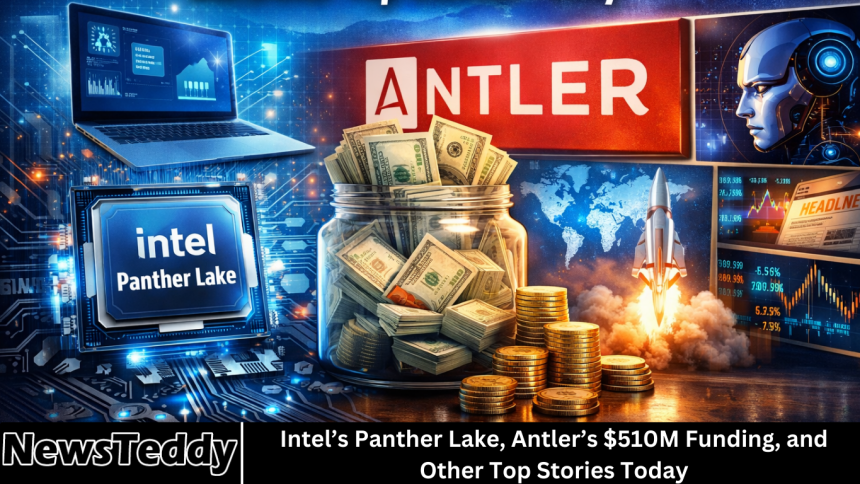
Intel’s Panther Lake processors, Antler’s massive $510 million funding round, and multiple supporting headlines together paint a clear picture of ambition, competition, and long-term strategy across the tech industry.
Intel Panther Lake Chips Signal New Phase for PC Performance
Intel Panther Lake chips stand as one of the most anticipated processor families on the company’s roadmap. Positioned as a next-generation architecture, Panther Lake aims to deliver meaningful gains across performance efficiency, graphics capability, and artificial intelligence workloads.
Intel continues pushing toward leadership recovery within the semiconductor space, while competition from AMD, Apple Silicon, and ARM-based designs remains intense. Panther Lake processors represent Intel’s continued investment in advanced manufacturing processes.
With a focus on power efficiency and scalable performance, these chips target premium laptops, business systems, and performance-focused consumer devices. Intel places special emphasis on hybrid core designs, balancing performance cores with efficiency cores to optimize workloads across multitasking, creative software, and AI-driven applications.
AI acceleration plays a central role within Panther Lake architecture. Integrated neural processing capabilities allow devices to handle on-device AI tasks without relying solely on cloud resources. This shift supports privacy, speed, and energy efficiency. Features such as real-time translation, generative AI assistance, intelligent photo editing, and predictive system optimization benefit directly from these capabilities.
Graphics improvements also define Panther Lake development. Intel continues refining integrated GPU technology to deliver stronger visual performance for gaming, media editing, and immersive displays. Enhanced support for high-resolution monitors, advanced codecs, and improved ray tracing capability helps close historical gaps between integrated graphics and entry-level discrete GPUs.
Enterprise adoption remains a major objective. Panther Lake chips aim to support business environments through improved security features, hardware-level encryption, remote manageability, and long-term stability commitments. Intel positions these processors as foundations for modern workplace computing, supporting hybrid work models and cloud-connected workflows.
Manufacturing strategy forms another critical component. Intel’s roadmap aligns Panther Lake with internal fabrication advancements while also maintaining flexibility across foundry partnerships. Supply chain resilience, yield optimization, and production scalability factor heavily into how Panther Lake reaches global markets.
The broader PC ecosystem watches Panther Lake closely. OEM partners plan device launches aligned with performance promises, battery life improvements, and AI-enabled user experiences. Analysts view Panther Lake as a milestone that could strengthen Intel’s competitive standing while shaping next-generation laptop expectations.
More Read: Amazon brings Alexa+ chat to the web as it aimsat ChatGPT
Antler Secures $510 Million to Fuel Global Startup Creation
Antler’s $510 million funding round marks one of the most significant venture capital developments within early-stage investing. Known as a global startup generator, Antler focuses on building companies from day zero, supporting founders before ideas even reach product stages. This fresh capital strengthens Antler’s mission to back ambitious entrepreneurs across multiple continents.
The funding expansion allows Antler to scale operations across key markets, including North America, Europe, Southeast Asia, Africa, and Latin America. Early-stage founders benefit from capital access, structured programs, mentorship, and global investor networks. Antler’s model reduces barriers for first-time entrepreneurs while encouraging innovation in emerging markets.
Capital deployment focuses on technology-driven sectors with strong growth potential. Areas such as fintech, healthtech, climate solutions, artificial intelligence, SaaS platforms, and Web3 infrastructure continue attracting founder interest. Antler positions itself as a long-term partner, often remaining involved beyond initial funding stages.
The $510 million raise also reflects broader investor confidence in early-stage ecosystems despite market volatility. While later-stage funding experienced caution during recent cycles, pre-seed and seed investment continues attracting attention due to lower valuations and long-term upside potential.
Antler’s global approach differentiates it from traditional venture firms. By building founder communities, supporting cross-border teams, and fostering collaboration, Antler accelerates idea validation and product development. This structure allows rapid iteration while minimizing early execution risk.
Diversity and inclusion remain core priorities. Antler actively supports underrepresented founders by providing access to resources historically concentrated within limited geographies. The funding expansion strengthens this commitment by enabling more regional programs and local partnerships.
Startup ecosystems benefit from this capital influx through job creation, innovation spillover, and technology transfer. Antler’s portfolio companies often attract follow-on investment, creating multiplier effects across venture markets.
AI Continues Dominating Technology Headlines
Artificial intelligence remains central across today’s top technology stories. Hardware innovation, venture funding, and platform development increasingly revolve around AI integration. Intel’s Panther Lake processors embed AI acceleration at the silicon level, while Antler’s investment strategy prioritizes AI-driven startups.
Generative AI tools continue expanding into creative workflows, enterprise software, marketing platforms, and customer service systems. Companies compete to deliver faster, more accurate, and more personalized AI solutions. On-device AI gains attention due to privacy concerns and cost efficiency.
Regulatory discussions also evolve. Governments and industry groups work toward frameworks balancing innovation with ethical responsibility. Topics such as data usage, algorithm transparency, and AI safety remain under active debate.
Education and workforce adaptation follow closely. Demand for AI literacy, data science expertise, and machine learning engineering continues rising. Companies invest heavily in upskilling programs and internal AI adoption strategies.
Semiconductor Industry Faces Competitive Shifts
Beyond Intel, the semiconductor landscape experiences rapid transformation. AMD continues pushing high-performance CPUs and GPUs. NVIDIA dominates the AI accelerator market. ARM-based designs gain traction across consumer and enterprise devices.
Manufacturing competition intensifies among foundries. Advanced process nodes, packaging innovation, and energy efficiency improvements define success. Governments support domestic chip production through incentives aimed at strengthening national supply chains.
Geopolitical factors influence chip development strategies. Trade policies, export controls, and regional investments reshape global manufacturing alignment. Companies adapt by diversifying production footprints and forming strategic partnerships.
Venture Capital Trends Reflect Long-Term Optimism
Antler’s $510 million funding highlights resilience within venture capital. While macroeconomic uncertainty influences valuation discipline, investors continue supporting innovation with long-term horizons.
Early-stage investing benefits from renewed focus. Funds allocate capital toward founders building foundational technology rather than short-term growth metrics. Sustainability, infrastructure software, and applied AI gain priority.
Geographic diversification remains prominent. Emerging markets attract venture interest due to growing talent pools, digital adoption, and unmet consumer needs. Antler’s global footprint aligns directly with this shift.
Consumer Technology Evolves Through Integration
Consumer devices increasingly blend hardware, software, and services. Intel’s Panther Lake chips support this convergence by enabling smarter, more responsive experiences. AI features operate locally, enhancing speed and personalization.
Smart home devices, wearables, and connected vehicles continue to integrate AI capabilities. Edge computing reduces latency while improving reliability. Consumers expect seamless interaction across platforms and ecosystems.
Battery efficiency and thermal management gain importance. Performance improvements must align with portability and sustainability expectations. Panther Lake’s focus on power optimization reflects this demand.
Enterprise Technology Embraces Hybrid Models
Enterprise environments continue evolving toward hybrid infrastructure. Cloud services combine with on-premise computing, supported by powerful endpoint devices. Intel targets this segment through Panther Lake’s enterprise features.
Security remains a top priority. Hardware-level protections, secure boot processes, and encryption capabilities address increasing cyber threats. AI-driven threat detection enhances response speed.
Remote work tools, collaboration platforms, and virtual environments benefit from improved local processing power. Employees experience smoother workflows and reduced dependency on network conditions.
Sustainability Influences Technology Strategy
Sustainability considerations increasingly shape product development and investment decisions. Semiconductor manufacturing seeks energy efficiency improvements and waste reduction. Intel emphasizes responsible production practices alongside performance gains.
Venture capital funds integrate environmental and social impact metrics into investment criteria. Antler’s support for climate-focused startups reflects this alignment. Clean energy solutions, carbon-tracking platforms, and circular-economy models gain traction.
Consumers also influence sustainability trends. Demand grows for energy-efficient devices and transparent corporate responsibility reporting.
Media Platforms and Digital Economy Shifts
Digital media platforms adjust strategies amid changing user behavior. Short-form content, AI-assisted creation tools, and algorithm optimization drive engagement. Monetization models evolve through subscriptions, advertising innovation, and creator partnerships.
AI plays a growing role in content moderation, recommendation systems, and audience analytics. Ethical considerations remain part of ongoing discussions. E-commerce integration expands across social platforms, blending content consumption with purchasing behavior.
What These Stories Reveal About Technology Direction
Intel’s Panther Lake chips, Antler’s $510 million funding, and related developments reveal consistent themes. Innovation accelerates where hardware capability meets software intelligence. Capital flows toward foundational technology with global impact potential. AI continues to rreshapeevery layer of the technology stack.
Competition drives progress across semiconductors, startups, and platforms. Companies invest heavily in differentiation through performance, efficiency, and user experience. Global collaboration becomes essential as markets interconnect.
Founders, engineers, and investors operate within an environment defined by rapid change and opportunity. Success depends on adaptability, long-term vision, and execution excellence.
Looking Ahead at the Tech Landscape
Upcoming product launches, funding announcements, and regulatory decisions will further influence momentum. Intel’s Panther Lake rollout may shape PC market expectations. Antler’s expanded capital deployment likely introduces new startups solving complex global challenges.
AI integration will deepen across consumer and enterprise products. Semiconductor innovation remains critical as computing demand grows. Venture capital continues fueling experimentation and disruption.
Today’s top stories highlight a technology ecosystem moving forward with confidence, creativity, and strategic investment. Innovation remains constant, powered by advanced chips, bold founders, and capital committed to shaping the future of digital life.
Frequently Asked Question
What makes Intel’s Panther Lake chips important?
Panther Lake brings stronger performance, better power efficiency, and built-in AI acceleration for next-generation laptops and PCs.
Which devices will use Intel Panther Lake processors?
Panther Lake targets premium laptops, business systems, and high-performance consumer PCs.
Why is Antler’s $510M funding significant?
The funding allows Antler to support more early-stage founders globally and expand startup creation programs across multiple regions.
What types of startups does Antler invest in?
Antler focuses on AI, fintech, healthtech, climate tech, SaaS, and other technology-driven startups.
How does AI connect these top tech stories?
AI drives chip design, startup investment, and product innovation across hardware, software, and digital platforms.
What trend does Antler’s funding reflect in venture capital?
It shows strong investor confidence in early-stage startups despite broader market uncertainty.
What do these stories reveal about the tech industry today?
They highlight rapid innovation, global investment growth, and increasing focus on AI-powered technology.
Conclusion
Intel’s Panther Lake, Antler’s $510M funding, and today’s other top technology stories together reflect a tech industry moving with confidence toward its next growth phase. From advanced chip innovation to bold early-stage investment, momentum continues building across hardware, software, and global startup ecosystems.
Intel’s Panther Lake processors highlight how performance, efficiency, and AI integration now define modern computing. These chips signal a future where personal and enterprise devices handle smarter workloads locally, deliver better battery life, and support increasingly complex applications.