


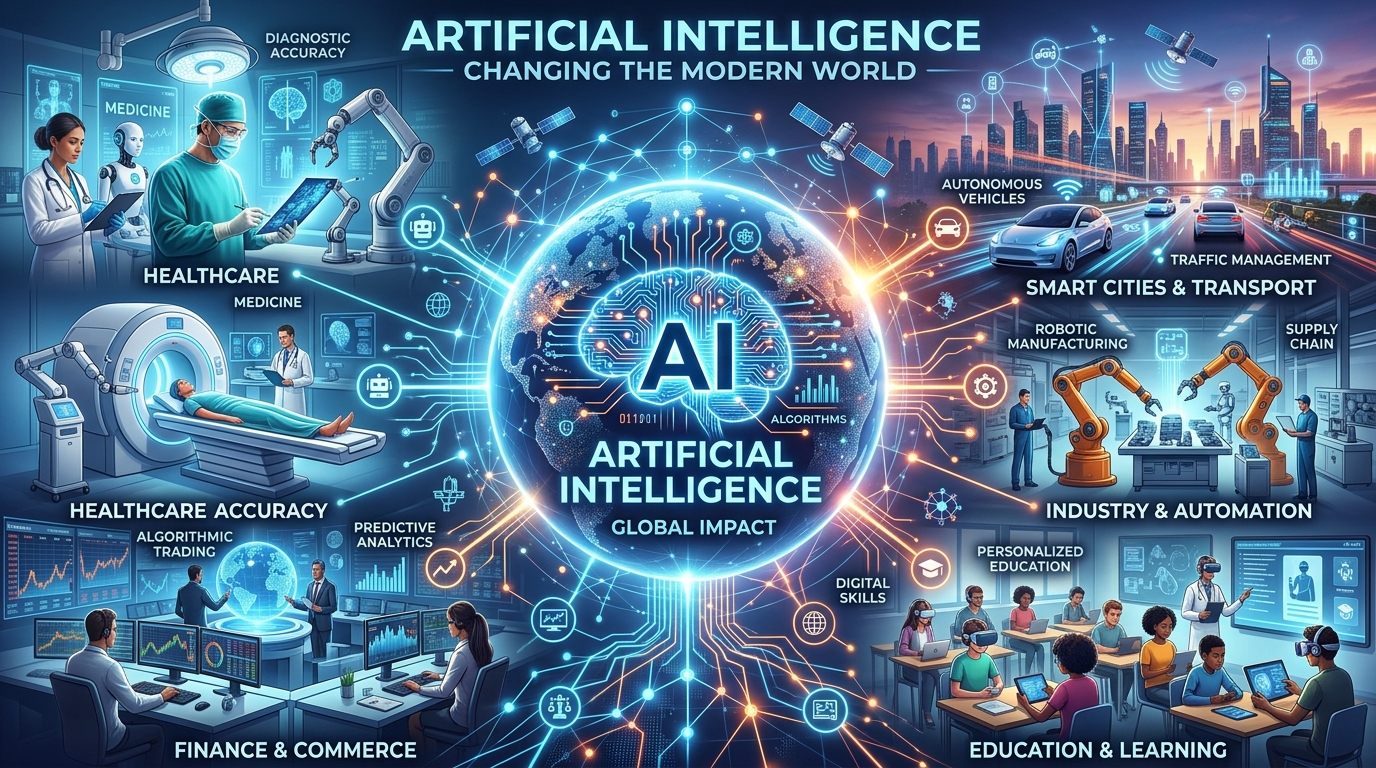
Artificial intelligence is rapidly reshaping how people live, work, and interact in the modern world. From everyday smartphone assistants to advanced medical systems and autonomous vehicles, AI is becoming deeply integrated into global industries. Its influence is not limited to technology alone but extends to education, business, healthcare, and communication. As AI continues to evolve, it is redefining efficiency, decision-making, and innovation across nearly every sector of society.
AI In Everyday Life Applications
Smart Assistant Usage
Smart assistants powered by artificial intelligence help users manage daily tasks such as reminders, searches, and scheduling efficiently. These systems learn user preferences over time, making interactions more personalized and accurate. People rely on them for convenience, productivity, and faster access to information in daily routines.
Recommendation System Influence
Recommendation systems analyze user behavior to suggest relevant content, products, or media on platforms like streaming services and online stores. These AI-driven tools improve user experience by saving time and increasing engagement. They also shape online consumption patterns significantly across entertainment and e-commerce platforms.
Voice Recognition Technology
Voice recognition allows devices to understand and respond to spoken commands accurately. This technology enhances accessibility for users and improves hands-free interaction with digital systems. It is widely used in smartphones, smart homes, and customer service applications, making communication with technology more natural and efficient.
Smart Home Automation
AI-powered smart homes control lighting, temperature, security, and appliances automatically based on user habits. These systems improve energy efficiency, safety, and comfort. Automation allows residents to manage homes remotely, creating a more convenient and modern living environment.
Navigation And Transport AI
Artificial intelligence enhances navigation systems by providing real-time traffic updates and optimized routes. Ride-sharing and transport apps use AI to improve travel efficiency and reduce delays. This technology helps users save time while improving overall transportation experiences.
| AI Application | Main Benefit | Impact Area |
|---|---|---|
| Smart Assistants | Task automation | Daily productivity |
| Recommendations | Personalized content | Entertainment & shopping |
| Smart Homes | Energy efficiency | Lifestyle comfort |
AI In Healthcare Revolution
Disease Detection Systems
AI helps doctors detect diseases early by analyzing medical images and patient data with high accuracy. Early diagnosis improves treatment success rates and saves lives. These systems support healthcare professionals by reducing human error and increasing diagnostic speed.
Medical Imaging Analysis
Artificial intelligence enhances MRI, CT scans, and X-ray analysis by identifying patterns that may be difficult for humans to detect. This improves precision in diagnosis and treatment planning. It also reduces workload for medical staff and increases efficiency in healthcare systems.
Drug Development Acceleration
AI speeds up the drug discovery process by analyzing biological data and predicting compound effectiveness. This reduces research time and development costs significantly. Pharmaceutical companies benefit from faster innovation and improved success rates in creating new medicines.
Virtual Health Assistants
Virtual assistants provide patients with medical guidance, appointment scheduling, and health monitoring support. They improve access to healthcare services, especially in remote areas. These systems enhance patient engagement and reduce pressure on healthcare facilities.
Predictive Health Monitoring
AI systems monitor patient data to predict potential health risks before they become serious. Wearable devices and health apps use this technology to track vital signs. Predictive monitoring helps in preventive healthcare and early intervention.
AI In Business Transformation
Automated Workflow Systems
Businesses use AI to automate repetitive tasks such as data entry, customer support, and reporting. This improves efficiency and reduces operational costs. Automation allows employees to focus on more strategic and creative tasks.
Customer Behavior Analytics
AI analyzes customer data to understand preferences, buying patterns, and market trends. This helps businesses make informed decisions and improve marketing strategies. Better insights lead to increased sales and customer satisfaction.
Chatbot Customer Service
AI chatbots provide instant customer support by answering queries and resolving issues 24/7. They improve response times and reduce workload for human agents. Chatbots enhance customer experience and operational efficiency.
Financial Risk Detection
AI systems detect fraudulent activities and financial risks by analyzing transaction patterns. This helps banks and companies prevent fraud and protect customer data. Risk detection improves financial security and trust.
Supply Chain Optimization
Artificial intelligence improves supply chain management by predicting demand and optimizing logistics. Businesses reduce waste, save costs, and improve delivery efficiency. This ensures smoother operations and better resource management.
AI In Education Systems
Personalized Learning Platforms
AI creates customized learning experiences based on student performance and learning speed. This helps students understand concepts better and improve academic outcomes. Personalized learning increases engagement and motivation.
Automated Grading Systems
AI assists teachers by automatically grading assignments and exams. This saves time and ensures consistent evaluation. It allows educators to focus more on teaching and student development.
Virtual Classrooms Technology
Virtual classrooms powered by AI enable remote learning with interactive tools and real-time feedback. Students can access education from anywhere in the world. This expands educational opportunities globally.
Language Learning Applications
AI-powered apps help users learn new languages through speech recognition and personalized lessons. These tools improve pronunciation, vocabulary, and comprehension. They make language learning more accessible and effective.
Student Performance Tracking
AI systems monitor student progress and identify areas of improvement. Teachers can use this data to provide targeted support. This improves academic success and learning efficiency.
AI In Industry Automation
Manufacturing Robotics
AI-powered robots perform manufacturing tasks with precision and speed. This increases productivity and reduces human error. Automation improves product quality and operational efficiency.
Predictive Maintenance Systems
AI predicts machine failures before they occur by analyzing equipment data. This reduces downtime and maintenance costs. Industries benefit from improved productivity and reduced disruptions.
Quality Control Automation
AI systems inspect products for defects during production. This ensures high-quality standards and reduces waste. Automated quality control improves manufacturing reliability.
Warehouse Management Systems
AI optimizes inventory storage and retrieval processes in warehouses. This improves efficiency and reduces operational delays. Businesses benefit from faster order processing.
Industrial Safety Monitoring
AI enhances workplace safety by detecting hazards and preventing accidents. Monitoring systems ensure compliance with safety standards. This protects workers and improves industrial environments.
AI In Communication And Media
Content Recommendation Algorithms
AI suggests news, videos, and articles based on user interests. This increases engagement and personalizes media consumption. It also shapes online information exposure.
Automated Content Creation
AI tools generate articles, summaries, and marketing content efficiently. This supports media production and reduces workload for creators. It enhances content availability across platforms.
Social Media Trend Analysis
AI analyzes trending topics and user behavior on social platforms. This helps businesses and influencers understand audience interests. Trend analysis improves marketing strategies.
Deepfake Technology Awareness
AI can create realistic synthetic media, raising concerns about misinformation. Awareness systems help detect manipulated content. This ensures information credibility and media trust.
Digital Advertising Optimization
AI improves online advertising by targeting specific audiences effectively. This increases conversion rates and reduces marketing costs. Businesses achieve better campaign performance.
Future Of Artificial Intelligence
Artificial General Intelligence Development
Researchers aim to create AI systems capable of human-like reasoning and learning. This could revolutionize industries and problem-solving capabilities. AGI represents the next major technological leap.
AI And Human Collaboration
Future workplaces will combine human creativity with AI efficiency. This collaboration enhances productivity and innovation. Humans and machines will work together more closely.
Ethical AI Governance
Governments and organizations are developing rules to ensure responsible AI use. Ethical frameworks prevent misuse and promote fairness. This builds trust in AI systems.
AI In Climate Solutions
Artificial intelligence helps analyze climate data and develop environmental solutions. It supports sustainability and resource management. AI contributes to global environmental protection efforts.
Expanding Global AI Access
AI technology is becoming more accessible worldwide, including developing regions. This reduces inequality and improves digital inclusion. Global access supports economic and social development.
What is artificial intelligence in simple terms?
Artificial intelligence is technology that enables machines to think, learn, and make decisions like humans.
How is AI used in daily life?
AI is used in smartphones, smart assistants, navigation apps, and online recommendations.
Is AI dangerous for jobs?
AI may replace some tasks but also creates new job opportunities in technology and innovation.
How does AI help in healthcare?
AI improves diagnosis, treatment planning, and patient monitoring through advanced data analysis.
What is the future of AI?
The future of AI includes smarter systems, human collaboration, and wider global applications.
Artificial intelligence is transforming the modern world by reshaping industries, improving daily life, and enhancing global communication. Its impact spans healthcare, business, education, and technology, making systems more efficient and intelligent. As AI continues to evolve, it offers both opportunities and challenges, requiring responsible use, ethical governance, and human collaboration to ensure a balanced and progressive future for society.
