


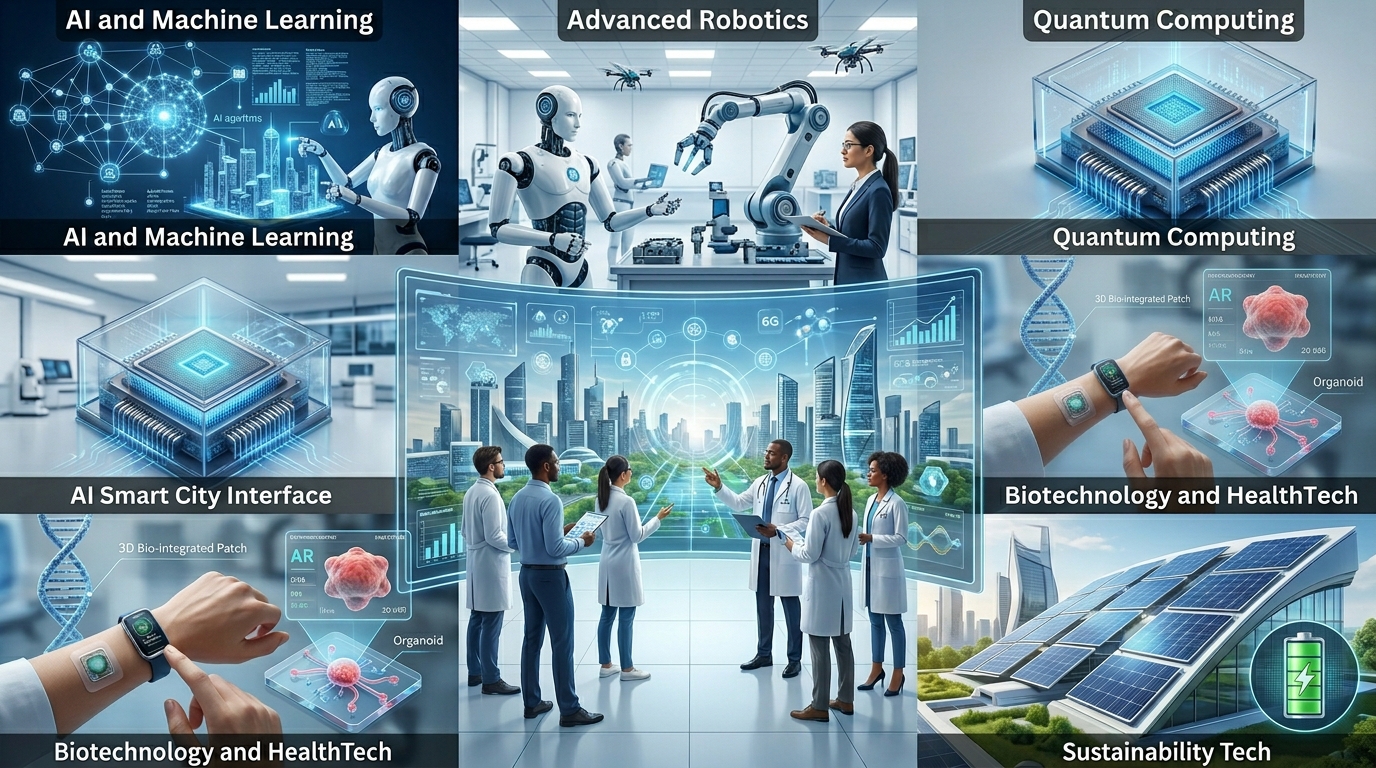
Technology is advancing at an incredible pace, reshaping how humans live, work, communicate, and solve problems. From artificial intelligence breakthroughs to quantum computing and sustainable energy systems, modern innovations are driving a new era of global transformation. These developments are not only improving efficiency but also redefining industries, creating smarter cities, and enabling more connected and intelligent societies worldwide.
Artificial Intelligence Advancements
Generative AI Evolution
Generative AI is transforming creativity by producing text, images, music, and videos with human-like quality. It supports industries such as marketing, entertainment, and education by automating content creation. Businesses use it to save time, reduce costs, and enhance productivity while delivering highly personalized digital experiences to users globally.
Machine Learning Improvements
Machine learning systems are becoming more accurate and efficient through advanced algorithms and larger datasets. These systems continuously learn from patterns to improve predictions and decision-making. Industries such as finance, healthcare, and retail benefit from smarter analytics, risk reduction, and improved customer experiences powered by machine learning models.
AI Powered Automation
AI automation is streamlining repetitive tasks across industries such as manufacturing, customer service, and logistics. Intelligent systems reduce human workload while increasing speed and accuracy. This leads to higher productivity, lower operational costs, and improved business efficiency across global markets.
Natural Language Processing Growth
Natural language processing enables machines to understand and respond to human language more effectively. It powers chatbots, translation tools, and voice assistants used daily worldwide. This innovation improves communication between humans and machines, making technology more accessible and user-friendly.
Predictive Intelligence Systems
Predictive AI systems analyze data to forecast future trends, behaviors, and outcomes. Businesses use this technology for demand forecasting, risk assessment, and strategic planning. It helps organizations make smarter decisions and stay competitive in fast-changing environments.
| AI Innovation | Key Benefit | Industry Impact |
|---|---|---|
| Generative AI | Content creation | Media & marketing |
| Machine Learning | Data accuracy | Finance & healthcare |
| Automation AI | Efficiency | Manufacturing |
Quantum Computing Breakthroughs
Quantum Processing Power
Quantum computers use qubits instead of traditional bits, allowing them to process complex calculations much faster. This enables breakthroughs in scientific research, cryptography, and simulation modeling. The technology has the potential to solve problems that are impossible for classical computers.
Quantum Cryptography Security
Quantum cryptography provides highly secure communication systems that are resistant to hacking. It uses quantum principles to detect unauthorized access attempts. This innovation is crucial for protecting sensitive data in government, banking, and defense sectors.
Drug Discovery Acceleration
Quantum computing helps simulate molecular interactions to speed up drug discovery processes. This reduces research time and improves accuracy in pharmaceutical development. It has the potential to revolutionize healthcare innovation and treatment development.
Climate Modeling Systems
Quantum technology enhances climate modeling by analyzing complex environmental data. This helps scientists predict weather patterns and climate change impacts more accurately. It supports better environmental planning and sustainability efforts.
Financial Optimization Models
Quantum algorithms improve financial modeling by analyzing market data and optimizing investment strategies. Banks and institutions use this technology to reduce risk and maximize returns. It enhances decision-making in complex financial systems.
Internet Of Things Expansion
Smart Home Ecosystems
IoT devices connect home appliances to create automated living environments. Users can control lighting, security, and temperature remotely. This improves convenience, energy efficiency, and overall lifestyle comfort.
Industrial IoT Systems
Industrial IoT improves manufacturing and logistics by connecting machines and sensors. It enables real-time monitoring, predictive maintenance, and operational efficiency. Businesses benefit from reduced downtime and improved productivity.
Wearable Health Devices
Wearable technology tracks health metrics such as heart rate, sleep, and activity levels. These devices help individuals monitor fitness and detect health issues early. They play a key role in preventive healthcare.
Smart City Infrastructure
IoT supports smart city development by managing traffic, energy, and public services efficiently. Cities become more sustainable and livable through connected systems. This improves urban planning and resource management.
Connected Transportation Networks
IoT enhances transportation systems by enabling real-time tracking and communication between vehicles. It improves traffic flow, safety, and logistics efficiency. This leads to smarter mobility solutions.
| IoT Application | Benefit | Impact Area |
|---|---|---|
| Smart Homes | Automation | Daily living |
| Wearables | Health tracking | Healthcare |
| Smart Cities | Efficiency | Urban management |
Renewable Energy Innovations
Solar Energy Efficiency
Advanced solar panels are becoming more efficient at converting sunlight into electricity. This reduces dependency on fossil fuels and supports sustainable energy production. Solar technology is becoming more affordable and widely accessible.
Wind Energy Technology
Modern wind turbines generate more power with improved design and materials. Offshore wind farms are expanding global renewable energy capacity. This helps reduce carbon emissions and supports clean energy transitions.
Energy Storage Solutions
Battery storage systems allow excess renewable energy to be stored for later use. This improves energy reliability and grid stability. It is essential for balancing renewable energy supply and demand.
Smart Grid Systems
Smart grids use digital technology to manage electricity distribution efficiently. They optimize energy usage and reduce waste. This leads to more reliable and sustainable power systems.
Hydrogen Fuel Development
Hydrogen energy is emerging as a clean fuel alternative for transportation and industry. It produces zero carbon emissions when used. This innovation supports long-term sustainability goals.
Biotechnology Innovations
Gene Editing Technology
Gene editing tools like CRISPR allow precise modification of DNA. This helps in treating genetic diseases and improving agricultural productivity. It represents a major breakthrough in medical science.
Synthetic Biology Applications
Synthetic biology creates engineered biological systems for medical, industrial, and environmental use. It enables the production of biofuels, medicines, and sustainable materials. This innovation transforms biotechnology industries.
Personalized Medicine Growth
Personalized medicine tailors treatments based on individual genetic profiles. This improves treatment effectiveness and reduces side effects. It is revolutionizing healthcare delivery.
Regenerative Medicine Advances
Regenerative medicine focuses on repairing or replacing damaged tissues and organs. Stem cell research plays a key role in this field. It offers hope for treating previously incurable diseases.
Bioinformatics Systems
Bioinformatics uses computational tools to analyze biological data. It supports research in genetics, disease prediction, and drug development. This enhances scientific discovery.
Robotics And Automation Progress
Autonomous Robotics Systems
Autonomous robots can perform tasks without human intervention. They are used in manufacturing, healthcare, and exploration. This improves efficiency and safety in complex environments.
Human Robot Collaboration
Collaborative robots, or cobots, work alongside humans in workplaces. They assist with repetitive or dangerous tasks. This improves productivity and workplace safety.
Delivery Drone Technology
Drones are used for fast and efficient delivery of goods. They reduce delivery time and transportation costs. This innovation is transforming logistics and e-commerce.
Agricultural Automation Tools
Robots in agriculture help with planting, harvesting, and monitoring crops. They increase efficiency and reduce labor dependency. This supports modern farming practices.
Space Robotics Exploration
Robots are used in space missions to explore planets and collect data. They operate in environments too dangerous for humans. This expands space exploration capabilities.
Cybersecurity And Digital Safety
Advanced Threat Detection
AI-powered cybersecurity systems detect threats in real time. They protect networks from cyberattacks and malware. This ensures safer digital environments.
Blockchain Security Systems
Blockchain provides secure and transparent data storage systems. It reduces fraud and enhances trust in digital transactions. This is widely used in finance and supply chains.
Privacy Protection Tools
Modern tools protect user data from unauthorized access and tracking. They enhance digital privacy and security. This is increasingly important in the digital age.
Zero Trust Architecture
Zero trust security models verify every access request continuously. This reduces the risk of internal and external threats. It strengthens enterprise security systems.
Cloud Security Innovations
Cloud platforms use advanced encryption and monitoring systems. This ensures safe data storage and access. It supports secure digital transformation for businesses.
What are the latest tech innovations today?
Latest innovations include AI, quantum computing, IoT, renewable energy, biotechnology, and robotics.
How is AI shaping the future of technology?
AI improves automation, decision-making, personalization, and efficiency across industries.
What is quantum computing used for?
Quantum computing is used for complex problem-solving in science, finance, and cryptography.
Why is IoT important in modern life?
IoT connects devices to improve automation, efficiency, and smart living systems.
What technologies will dominate the future?
AI, robotics, biotechnology, renewable energy, and quantum computing will dominate future innovations.
Latest technological innovations are reshaping the world by driving smarter systems, sustainable energy, advanced healthcare, and intelligent automation. These breakthroughs are improving efficiency, enhancing human capabilities, and solving global challenges. As technology continues to evolve, it will create more connected, intelligent, and sustainable societies, shaping a future defined by innovation, collaboration, and continuous progress.
