


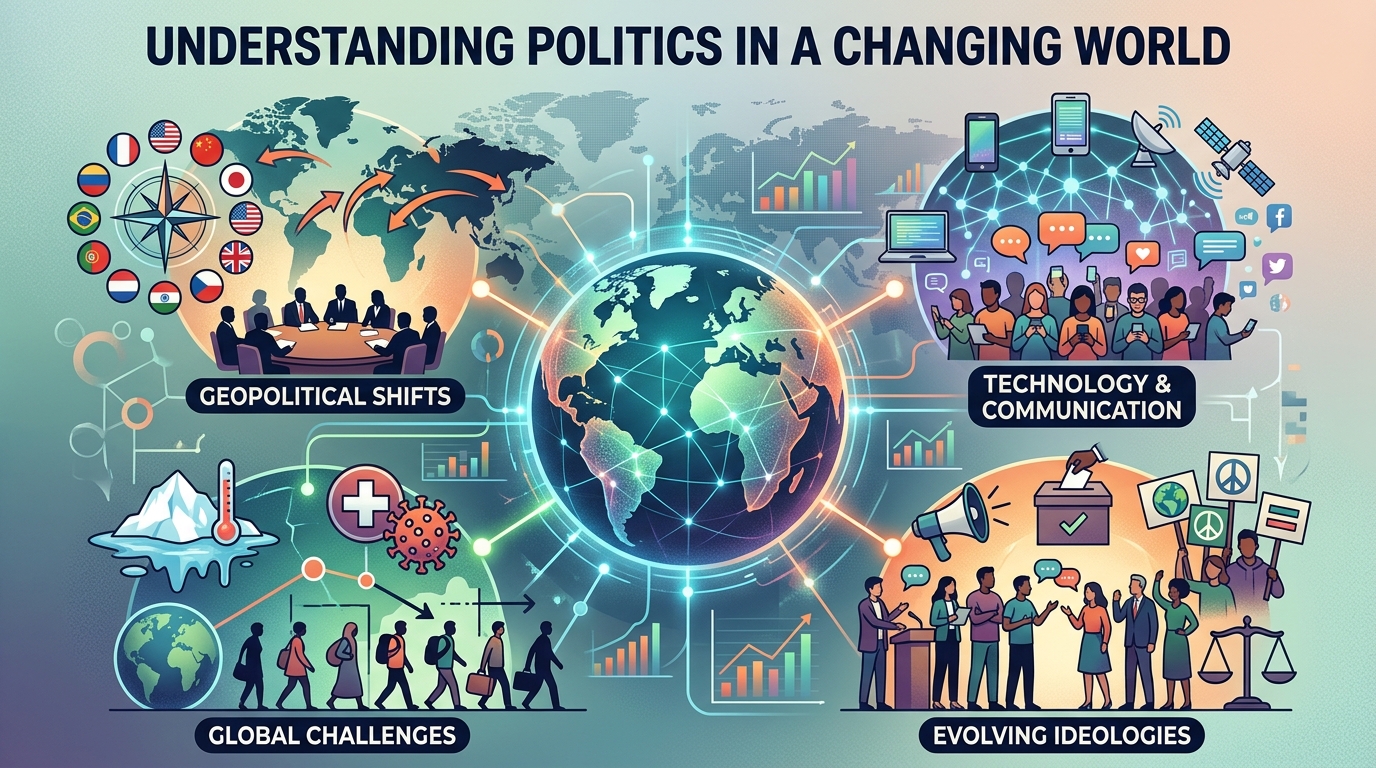
Understanding politics in a changing world is essential for interpreting global events, policy decisions, and international relationships. Modern politics is influenced by technology, economics, and public opinion, making it more dynamic than ever. Learning how these forces interact helps individuals make informed judgments about governance, society, and global cooperation effectively.
Global Political Shifts
Changing Power Structures
Global power structures are shifting as emerging nations gain influence alongside traditional powers such as United States and China. These changes affect diplomacy, trade, and security alliances. Understanding these transitions helps interpret international relations and shows how economic and strategic interests reshape global leadership patterns patterns
Rise of Multipolar World
Modern international relations are moving toward a multipolar world where several major powers influence global decisions. Alongside United States, China, and emerging economies like India, global governance becomes more complex. This shift encourages cooperation, competition, and strategic balancing among nations across political and economic systems
Regional Conflicts and Stability
Regional conflicts continue to shape global stability, involving alliances such as NATO and organizations working toward peace. These disputes often arise from territorial, economic, or political tensions. Understanding regional dynamics helps policymakers reduce escalation risks, promote diplomacy, and support long term stability in affected areas
Economic Influence in Global Politics
Global economic influence plays a major role in shaping political decisions and international relations. Institutions like World Bank and International Monetary Fund guide financial stability efforts. Economic power impacts trade policies, alliances, and development strategies, making financial systems central to modern political structures worldwide today
Shifting Alliances and Diplomacy
Shifting alliances in global politics reflect changing diplomatic priorities and national interests. Organizations like United Nations facilitate dialogue between countries to maintain peace and cooperation. These evolving relationships influence trade, security, and global decision making, requiring constant adaptation by governments to maintain strategic balance internationally
Role of International Organizations
Purpose of Global Institutions
Global institutions such as United Nations and World Health Organization play essential roles in maintaining peace, health, and cooperation among countries. They provide platforms for dialogue, crisis response, and policy coordination. These organizations help address global challenges that individual nations cannot effectively solve alone effectively
Role of Financial Institutions
International financial institutions like World Bank and International Monetary Fund support global economic stability by providing loans, policy guidance, and financial assistance. They help developing nations improve infrastructure, reduce poverty, and manage economic crises. Their influence shapes global development and economic cooperation among countries globally
Peacekeeping and Conflict Resolution
Peacekeeping missions led by United Nations help prevent conflicts and maintain stability in regions affected by violence. These operations involve military, diplomatic, and humanitarian efforts. Conflict resolution strategies focus on negotiation, mediation, and rebuilding trust between nations and communities to ensure lasting peace worldwide today
Global Trade Coordination
Global trade coordination involves agreements and policies that regulate exchange of goods and services between countries. Organizations like World Trade Organization ensure fair trade practices and dispute resolution. These systems support economic growth, international cooperation, and balanced development among nations participating in global markets today
Humanitarian Cooperation
Humanitarian cooperation between nations and organizations helps address crises such as disasters, poverty, and displacement. United Nations agencies coordinate relief efforts, provide aid, and support recovery. These initiatives strengthen global solidarity, improve living conditions, and ensure vulnerable populations receive necessary assistance during emergencies worldwide effectively
Media Influence on Politics
Role of News Media
News media plays a crucial role in shaping public understanding of political events by providing information, analysis, and updates. Reliable journalism helps citizens make informed decisions. However, media bias can influence perceptions, making critical thinking essential when consuming political news from various sources globally today
Social Media and Politics
Social media platforms significantly influence political communication by spreading information rapidly and connecting leaders with citizens directly. They enable public discussions, mobilize support, and shape opinions. However, misinformation and echo chambers can distort reality, making responsible usage and verification important in digital political environments today
Media Bias and Objectivity
Media bias affects how political stories are presented, influencing public opinion and trust in information sources. Objectivity in journalism is essential to ensure fair reporting. Understanding bias helps audiences critically evaluate news content, differentiate facts from opinions, and develop informed perspectives on political issues today
Information Overload Challenges
Information overload in modern media environments makes it difficult for individuals to distinguish accurate news from misinformation. Constant exposure to updates can create confusion and stress. Developing media literacy skills helps people analyze content effectively, filter reliable sources, and maintain balanced perspectives in politics today
Media’s Role in Democracy
Media plays an essential role in democracy by informing citizens, holding leaders accountable, and encouraging public participation in governance. Transparent reporting supports fairness and trust. A free press ensures balanced debate, empowers voters, and strengthens democratic systems across nations with responsible communication practices globally today
Economic Factors in Governance
Economic Policy and Politics
Economic policies strongly influence political decisions by shaping taxation, public spending, and development priorities. Governments rely on institutions like World Bank and International Monetary Fund for guidance. These policies affect employment, inflation, and national stability, making economic management central to effective governance systems today globally
Trade and Development
International trade plays a vital role in economic development by allowing countries to exchange goods, services, and technology. Trade agreements promote cooperation and growth. Organizations such as World Trade Organization ensure fairness, while governments use trade policies to strengthen economies and improve living standards globally
Inflation and Cost of Living
Inflation affects the cost of living by increasing prices of goods and services, reducing purchasing power for citizens. Governments implement monetary and fiscal policies to control inflation. Economic stability depends on managing inflation effectively, ensuring citizens maintain reasonable living standards and financial security long term
Employment and Governance
Employment levels significantly influence political stability and economic growth within a country. Governments create policies to generate jobs, reduce unemployment, and support workforce development. Strong employment rates improve living standards, increase consumer spending, and contribute to overall national progress and governance effectiveness over time now
Economic Inequality Issues
Economic inequality affects political stability and social development by creating gaps in income, education, and opportunities. Governments implement policies to reduce inequality through taxation and welfare programs. Addressing inequality improves social harmony, increases economic participation, and supports balanced national development across societies very effectively today
Democracy and Governance Trends
Evolution of Democracy
Democracy has evolved over time, adapting to social, economic, and technological changes across nations. Modern democratic systems emphasize participation, transparency, and accountability. Citizens now have greater access to information and voting systems, making governance more inclusive and responsive to public needs worldwide in modern times
Citizen Participation
Citizen participation is essential for strengthening democratic systems by involving people in decision making processes such as voting, public debates, and community engagement. Active participation ensures accountability, improves governance quality, and allows governments to better understand and address the needs of society effectively over time
Transparency in Governance
Transparency in governance builds trust between citizens and governments by ensuring openness in decision making processes, policies, and public spending. It reduces corruption, improves accountability, and strengthens democratic institutions. Transparent systems allow citizens to stay informed and participate actively in shaping political outcomes globally today
Challenges to Democracy
Democratic systems face challenges such as misinformation, political polarization, corruption, and declining public trust. These issues weaken governance and reduce citizen engagement. Addressing these challenges requires strong institutions, education, and reforms that promote fairness, accountability, and equal participation in political processes worldwide over time now
Future of Governance
Future governance is expected to become more digital, transparent, and citizen focused, integrating technology into decision making processes. Governments will likely adopt data driven policies and improve communication with citizens. These changes aim to enhance efficiency, accountability, and public trust in institutions globally over time
Technology and Digital Politics
Digital Political Campaigns
Digital political campaigns use online platforms and social media to reach voters, spread messages, and influence public opinion. These campaigns allow targeted communication, real time engagement, and data driven strategies. Technology has transformed how politicians connect with citizens and promote policies effectively worldwide over time
Cybersecurity in Politics
Cybersecurity has become a critical aspect of modern politics as governments protect sensitive data, election systems, and communication networks from cyber threats. Increasing digital dependency requires strong security measures, international cooperation, and constant monitoring to prevent cyberattacks that could disrupt democratic processes and governance globally
Data and Political Decision Making
Data analytics plays an important role in political decision making by providing insights into public opinion, economic trends, and social behavior. Governments use data driven approaches to design policies, improve efficiency, and respond to citizen needs more accurately and effectively in modern governance systems today
Artificial Intelligence in Governance
Artificial intelligence is increasingly used in governance to improve decision making, automate services, and analyze large datasets. Governments adopt AI for efficiency, fraud detection, and public service delivery. While beneficial, it raises ethical concerns, requiring careful regulation and responsible implementation in political systems globally today
Digital Rights and Privacy
Digital rights and privacy are essential in modern politics as citizens demand protection of personal data and freedom of expression online. Governments must balance security with individual rights. Strong privacy laws and regulations ensure trust in digital systems and protect democratic values effectively globally today
Civic Awareness and Public Participation
Importance of Civic Education
Civic education helps individuals understand political systems, rights, and responsibilities within society. It encourages informed participation in democratic processes and strengthens governance. Educated citizens are more likely to vote, engage in discussions, and contribute positively to national development and social progress effectively over time now
Voting and Democratic Duty
Voting is a fundamental democratic duty that allows citizens to choose leaders and influence government policies. Active participation in elections strengthens democracy and ensures representation. Responsible voting requires awareness, critical thinking, and understanding of political issues affecting society and governance structures over time today effectively now
Community Engagement Role
Community engagement strengthens relationships between citizens and governments by encouraging participation in local decision making processes. It promotes transparency, accountability, and collaboration. Active involvement in community activities helps address social issues, improve public services, and build stronger, more connected societies effectively today over time now
Youth Participation in Politics
Youth participation in politics is essential for shaping future leadership and ensuring diverse perspectives in governance. Young people contribute innovation, energy, and awareness to political processes. Encouraging youth involvement strengthens democracy, promotes inclusivity, and helps societies adapt to changing social and economic conditions over time
Responsible Citizenship
Responsible citizenship involves understanding rights, fulfilling duties, and contributing positively to society. It includes respecting laws, participating in governance, and promoting social harmony. Responsible citizens help build stable communities, support democratic values, and encourage sustainable development through active engagement and ethical behavior today over time
Why is global politics changing so rapidly?
Global politics is changing rapidly due to technological advancement, economic shifts, climate issues, and increasing international interdependence among nations.
How do international organizations influence politics?
International organizations like United Nations and World Trade Organization influence politics by promoting cooperation, resolving conflicts, and setting global standards.
What role does media play in politics?
Media shapes public opinion, informs citizens, and holds governments accountable through news reporting and analysis.
How does technology affect governance?
Technology improves governance through data analysis, digital communication, and efficient public service delivery systems.
Why is civic participation important?
Civic participation strengthens democracy by ensuring citizen involvement in decision making and governance processes.
Understanding politics in a changing world helps individuals interpret global events, economic shifts, and governance systems more effectively. It encourages critical thinking, awareness, and responsible citizenship. By studying political dynamics, people can better understand international relationships and societal challenges. Informed perspectives support stronger communities, better decision making, and long term stability across nations in an interconnected global environment effectively
